Is the doctrine of imputed sin biblical?
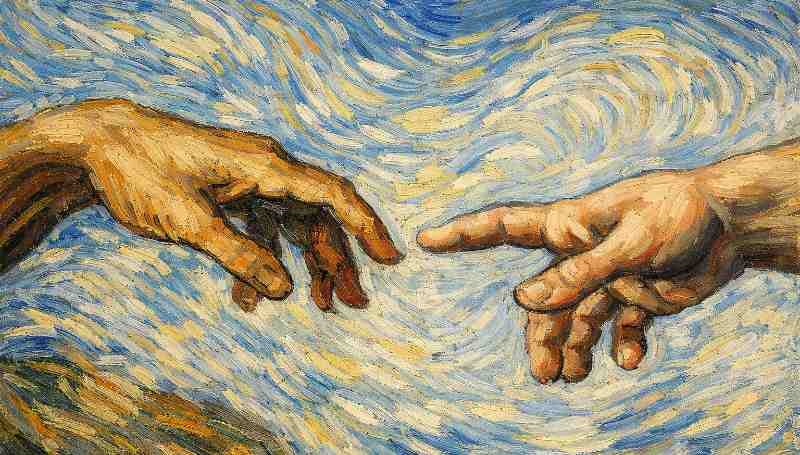
Imputed sin is a theological term used to describe the idea that the guilt of Adam’s sin was attributed (or “credited”) to his descendants, and, in parallel, that the righteousness of Christ is attributed to those who believe.
Is the doctrine of imputed sin biblical?
“For as in Adam all die…” (1 Corinthians 15:22).
Introduction
Imputed sin is a theological term used to describe the idea that the guilt of Adam’s sin was attributed (or “credited”) to his descendants and, in parallel, that the righteousness of Christ is attributed to those who believe. This formulation frequently appears in explanations of Reformed soteriology and in debates concerning Romans 5, justification, and “imputation.”
In this text, we examine the biblical use of this theme in light of Paul’s argument concerning Adam and Christ. We distinguish between personal guilt and inherited condition, and we evaluate whether Scripture describes the fall and salvation as a mere automatic legal transfer or rather as representative solidarity (death in Adam and life in Christ), expressed through union with Christ, the death of the old man, and the new creation.
Adam’s sin and its double effect on humanity
In Eden, God granted humanity full freedom: “Of every tree of the garden you may freely eat…” (Genesis 2:16). This freedom, however, was neither arbitrary nor irresponsible. As every real freedom implies the possibility of choice, the divine command included a clear and solemn limit: “…but of the tree of the knowledge of good and evil you shall not eat…”, accompanied by the explicit warning: “…for in the day that you eat of it you shall surely die.”
The command did not restrict freedom; rather, it defined and made it responsible. Humanity was free precisely because it could obey or disobey. The warning revealed God’s care for His creature and made the act fully conscious. Thus Adam, although holy, righteous, and good, was not morally neutral nor innocent in the sense of being unaware of the consequences of his act.
In the garden there were two trees with distinct properties: the tree of life and the tree of the knowledge of good and evil. The prohibition applied exclusively to the latter. The expression “forbidden fruit,” often used, is not a technical term found in the biblical text; it became popular largely through the emphasis of the temptation narrative, in which the serpent, speaking with Eve, shifts the meaning of the command by suggesting that God was restricting something that actually presupposed freedom of choice (Genesis 3:1).
The command regarding the tree of knowledge presents two consequences associated with a single act:
(1) death, as the certain result of disobedience — “you shall surely die” — and
(2) the acquisition of the knowledge of good and evil — “you will be like God.”
Thus, a double effect appears: rupture with life and assimilation into a new cognitive condition. The command explicitly mentioned death as the consequence of the act, and the narrative simultaneously shows the cognitive effect (the opening of the eyes, shame, and so forth).
By taking the fruit and eating it, Adam exercised his freedom against the word that preserved his life. The consequence was irreversible by human means, demonstrating that his decision was effective within the sphere entrusted to him. Adam did not possess the power to alter his own nature independently; however, when he transgressed, the power contained in the command — an expression of divine authority — acted immediately. The command intended to preserve life became the occasion for death (cf. Romans 7:11).
At that moment a separation occurred between humanity and the life that is in God. The one who had lived in freedom came under the dominion of sin. Therefore the apostle declares that “through one man sin entered the world, and death through sin” (Romans 5:12). Death did not remain restricted to Adam; it extended to all his descendants. For this reason it is also said that “all sinned.”
This expression does not mean that every human being had to repeat Adam’s transgression individually in order to be considered a sinner. Such a hypothesis would be impossible, because it would require each individual to become the representative head of the race and to receive a personal command similar to Adam’s. When Paul states that “all sinned,” the meaning is that all were reached by the death that entered through the offense of the first man. Sin thus becomes a condition resulting from the inherited death — what tradition has called original sin.
However, Adam’s offense produced not only the entrance of sin and death into the world. There was also a second simultaneous effect: humanity became a knower of good and evil. This knowledge brought immediate consequences. Adam and Eve realized they were naked and sought to remedy the situation with their own resources. Curiously, they show no immediate awareness of the gravity of the death that had reached them; instead, they focus on nakedness — a secondary consequence — rather than on the vital rupture with God.
Thus the two consequences of the offense in Eden were:
(1) death — separation from divine life and subjection to sin — and
(2) the knowledge of good and evil, which becomes the foundation of human morality.
This knowledge explains why even the Gentiles, who did not receive the Mosaic law, demonstrate that they have a law for themselves (Romans 2:14). The basis of human moral consciousness arises from this primordial event.
The Reformed doctrine, however, introduces a different interpretive framework. According to this reading, the two effects would be:
(1) original sin as inherited corruption, and
(2) imputed sin as transferred legal guilt.
In this formulation, the element of the knowledge of good and evil — which grounds universal moral consciousness — is displaced or minimized, being replaced by the emphasis on a juridical category of imputation.
Nevertheless, the biblical narrative indicates that Adam’s offense produced a double ontological and existential effect: death and moral knowledge. Death explains the universal condition of subjection to sin; the knowledge of good and evil explains the universality of moral conscience. A reading that reduces the effects of Eden exclusively to forensic categories risks obscuring the original structure of the text, which describes a real change of condition rather than merely a change of legal status.
Adam’s Credited Guilt?
The apostle Paul is specific in stating that all human beings are considered sinners in Adam because death—the direct consequence of his disobedience—passed to all, both Jews and Gentiles alike. For this reason, judgment and condemnation weigh upon all (Romans 5:16).
It is important to observe carefully the structure of the argument. Paul does not say that Adam’s personal guilt was legally credited to his descendants. Paul does not formulate sin as a transfer of personal guilt; rather, he describes it as representative solidarity and the dominion of death. What he affirms is that “through one offense judgment came,” and that through sin death entered, which then passed to all (Romans 5:12,16). Judgment and condemnation are not future events awaiting individual application; they refer to the historical event that occurred in Eden (John 3:18). The judgment had already been pronounced in the sentence: “you shall surely die.”
Thus, what is transmitted is not guilt imputed as a legal debt, but death as the consequence of the offense. “The sting of death is sin, and the power of sin is the law” (1 Corinthians 15:56). The divine sentence affected human nature, introducing death as a condition. The issue is not the crediting of guilt, but the effect of death. The question does not involve merit in the sense that the descendants “deserve” the same individual punishment as Adam; rather, it involves condition: all are born alienated from the life that is in God.
The notion that imputed sin alters the legal standing of Adam’s descendants before God does not arise directly from the biblical text. Adam was the one who was guilty, judged, and condemned. What reaches his descendants is the effect of that condemnation—death. This is why all are called sinners: not because they have legally received another’s guilt, but because they participate in the condition resulting from that offense.
It is also mistaken to claim that original sin primarily ruins human morality or destroys character in an absolute sense. Original sin affects nature—that is, it separates humanity from the life of God. Morality, in turn, arises from the knowledge of good and evil acquired in Eden. Moral consciousness was not annulled by the fall; rather, it was intensified. Even without the Mosaic law, the Gentiles demonstrate that they have a law for themselves (Romans 2:14), confirming that moral awareness is the result of that primordial event.
The apostle Paul repeatedly addresses death as a reality that reaches all in solidarity with Adam: “by the offense of one many died” (Romans 5:15); “through one offense judgment came upon all men” (Romans 5:18); “by the disobedience of one man many were made sinners” (Romans 5:19); and again, “in Adam all die” (1 Corinthians 15:22). The focus is not the transfer of guilt, but the universality of death as a condition.
It is therefore a mistake to restrict Romans 5:12 to physical death as merely a biological penalty (“returning to dust”). The text states: “through one man sin entered the world, and death through sin, and thus death spread to all men, because all sinned.” The phrase “all sinned” is language that emphasizes participation in the Adamic condition, and Paul confirms this by the context. Death here is a reality that involves separation from the life of God, whose ultimate expression is physical death but whose essence is spiritual rupture.
The notion of imputed sin as an automatic legal transfer of guilt encounters serious difficulty in light of the principle explicitly affirmed in Scripture: “the soul who sins shall die” (Ezekiel 18:4). The context itself reinforces that children do not bear the personal moral guilt of their parents (Ezekiel 18:2; Jeremiah 31:29). Responsibility is individual with respect to the act committed. Thus Ezekiel 18 prevents the conclusion of “transferred personal moral guilt,” while Romans 5 explains the “effect of representative headship” (death/condition).
In this sense, Adam’s sin was an act of guilt belonging exclusively to him. It was he who transgressed the commandment, and upon him fell directly the judgment pronounced in Eden. However, because he was the head of the race, his transgression produced an effect that extended beyond his own person: the death that affected his nature came to characterize the nature of all his descendants.
Thus, what is transmitted is not the personal guilt of the act, but the condition resulting from it. Solidarity in Adam does not imply the automatic imputation of individual moral responsibility, but participation in the existential reality resulting from his fall: the death that separates from the life of God.
Therefore, what is inherited is not credited guilt, but an affected condition. The death introduced by Adam became the universal condition of humanity. All are sinners not because they legally received Adam’s personal guilt, but because they were born under the dominion of the death that entered through him.
Are the Unrighteous Treated as Righteous?
The idea of imputed sin as an automatic legal transfer of guilt leads logically to a second problem: the notion that the believer is not actually made righteous, but merely treated as if he were righteous. According to this formulation—expressed, for example, in the article What Is Imputed Sin? on the website Got Questions[1]—the believer remains ontologically a sinner while only being positionally considered righteous due to an imputed righteousness derived from Christ.
In this perspective, justification does not transform the condition of the person; it merely alters his legal status. The believer continues to be what he was but is now viewed by God “as if” he were righteous. Righteousness does not belong to him ontologically; it is externally credited to him.
Such a construction, however, collides with the very efficacy of the gospel. The apostle Paul warns against forms that retain an appearance of godliness but deny its power (2 Timothy 3:5). The gospel does not announce a mere legal reclassification; it announces a new creation. The believer is described as a “new creature,” “born again through the word of truth,” and “created according to God in true righteousness and holiness” (Ephesians 4:24; 1 Peter 1:3,23). This is ontological language, not merely forensic language.
If the old man was crucified with Christ so that the body of sin might be destroyed (Romans 6:6), and if we were buried with Him through baptism into death, then justification cannot be reduced to an external legal fiction. The rupture with the Adamic condition is real. The bond with the old man has been terminated.
When comparing original sin and imputed sin, the website Got Questions states: “Imputed sin affects our standing before God (we are guilty, condemned), while original sin affects our character (we are morally ruined).” This distinction introduces categories—standing and character—that are not structural in Paul’s argument in Romans 5. Paul speaks of death, dominion, and representative solidarity, not merely abstract categories of legal position.
Adam’s sin, as presented in Scripture, is not described as a legal transfer of guilt to his descendants, but as the introduction of a condition: death. The dominant image is not that of a courtroom, but of slavery. Whoever is born of a slave is considered a slave. By transgressing the commandment, Adam came under the dominion of sin because of the sentence: “you shall surely die.” Death implied subjection.
In Romans 5:16, Paul uses the participle ἑνὸς ἁμαρτήσαντος (“of the one who sinned”). The verb ἁμαρτάνω in this context clearly indicates the transgression of a specific command. One sinned—Adam. He violated the personal command given to him in Eden. It was a concrete offense, like an archer missing the target: the target was to remain in the state of perfection in which he had been created, and disobedience caused him to fail to reach it.
However, when Paul states in Romans 5:12 that “all sinned,” the usage is not identical. There the noun ἁμαρτία has already appeared in the chapter as lordship (Romans 6:17), that is, as a dominating power. Sin enters the world through the offense of one man, and through sin comes death. Death spreads to all—and it is in this context that Paul says all sinned.
The meaning, therefore, is not that all repeated Adam’s specific transgression, but that all came to participate in the condition of alienation resulting from death. The verb ἁμαρτάνω at this point does not emphasize individual normative transgression but the loss of an original condition—the loss of the standard, separation from the life that is in God. This is the same sense found in Romans 3:23: “all have sinned and fall short of the glory of God.” The emphasis falls not primarily on ruined moral character but on deprivation of a vital condition.
Thus the central problem of the fall is not merely juridical but ontological: separation from divine life. And if the problem is ontological, the solution must also be ontological. When the Christian is born again “in true righteousness and holiness,” becoming a participant in the divine nature, this means that he once again participates in the life that is in God. The death that affected his former nature inherited from Adam no longer exercises dominion.
Therefore, biblical justification is not the legal treatment of the unrighteous as though they were righteous. It is the generation of new life. It is not merely a change of position; it is a change of condition. It is not an external representative fiction; it is real participation in the life of the last Adam.
How Can a Just God Justify the Ungodly?
At one point in the sermon The True Gospel of Jesus Christ, Paul Washer[1] asks: “What does it mean to be justified? Does it mean that at the moment a person places his faith in Christ Jesus he becomes righteous? No, because if that were the case, that person would never sin again.” This answer reveals a fundamental confusion: he treats “sin” primarily as recurring moral failure (daily conduct), and then concludes that if the justified person can still stumble, he cannot truly have been “made righteous.” In this way, justification tends to become a kind of legal fiction: God “declares” someone righteous who, in reality, would continue to be the same sinner—only with a new status.
The difficulty with this reading is that it shifts the focus away from what Paul presents as the core of justification: not the management of behavior under the knowledge of good and evil, but liberation from a lordship—sin as a dominating power—through the death and burial of the old man in union with Christ. In Romans 6, the apostle does not describe the cross as a mere “settling of accounts,” but as the place where “our old man was crucified with Him, that the body of sin might be destroyed, so that we should no longer serve sin” (Romans 6:6). The consequence is equally objective: “he who has died is justified from sin” (Romans 6:7), that is, he is released from sin as a master.
Therefore, when Washer defines justification on the basis of the argument “if someone were made righteous, he would never sin again,” he shifts Paul’s axis of argument. He reduces the debate to the realm of character and morality (the man who “sees that he is naked”), whereas Paul is dealing with the Adamic condition and its dominion: sin–death–slavery. This shift of focus also weakens the meaning of baptism, which in Paul is precisely a “baptism into death”: “we were baptized into Christ Jesus, we were baptized into His death” (Romans 6:3). Within this framework, baptism is not merely a social rite but the sign of union with Christ: the body of sin ascends with Christ to the cross and is deposited in the tomb with Him; therefore, the dominion of sin is broken.
At this point Scripture distinguishes between daily stumblings and “sinning” as the practice characteristic of those who remain under the lordship of sin. James acknowledges that “we all stumble in many things” (James 3:2), but Paul affirms that believers have been “freed from sin” and “made servants of righteousness” (Romans 6:18). If someone confuses stumbling with remaining under the dominion of sin, he ends up treating the believer’s new condition as nonexistent—and inevitably returns to a merely positional justification.
The emphasis of Jesus, as recorded by John, points in the same direction: “everyone who commits sin is a slave of sin” (John 8:34). And John goes so far as to say that “whoever is born of God does not practice sin… and he cannot sin, because he is born of God” (1 John 3:9). The argument does not deny the existence of stumblings or faults along the journey, but affirms that the one born of God does not live under the regime of sin as a master, as a dominating principle and identity. Hence the seriousness of the theological consequence: if justification does not break the dominion of sin, and the justified person remains “found to be a sinner” in the same sense as before, then the problem pointed out by Paul arises: “if we… seeking to be justified by Christ, we ourselves also are found sinners, is Christ therefore a minister of sin? Certainly not!” (Galatians 2:17). A conception of justification that leaves the person essentially under the same lordship risks reintroducing—through another door—the idea of Christ as a “minister” of what He came to destroy, which is unacceptable.
Thus the question, “How can a just God justify the ungodly?” finds its answer within Paul’s own framework. God is just when the sinner submits to the lordship of Christ—“to whom you present yourselves as slaves to obey, you are slaves of the one whom you obey” (Romans 6:16)—and, through this obedience (believing) to the gospel (faith), is conformed to the death of Christ (Philippians 3:10). In this union, the old man receives the wage that is due (death), the body of sin is destroyed, and sin ceases to exercise dominion. This is not God “overlooking” sin or “pretending” righteousness; it is justice fulfilled in the death of the Adamic man.
At the same time, God is the justifier of the one who believes: through this obedient faith the sinner is saved, not by moral merit, but because God was pleased to save those who believe. Once the body of sin has been destroyed and the old man buried in the death of Christ, the same power that raised Christ from the dead operates by giving life to the one who believes (Ephesians 1:19; 2:1). Justification, therefore, is not merely an external verdict; it corresponds to a new creation: the person is made alive, born of God, and this new creature is indeed created “in true righteousness and holiness.” Thus God remains just—because death occurred where death was due—and at the same time God is the justifier—because He brings life where previously there was death.
This is precisely what Romans 3:26 summarizes: God demonstrates His righteousness in Christ “so that He might be just and the justifier of the one who has faith in Jesus.”